
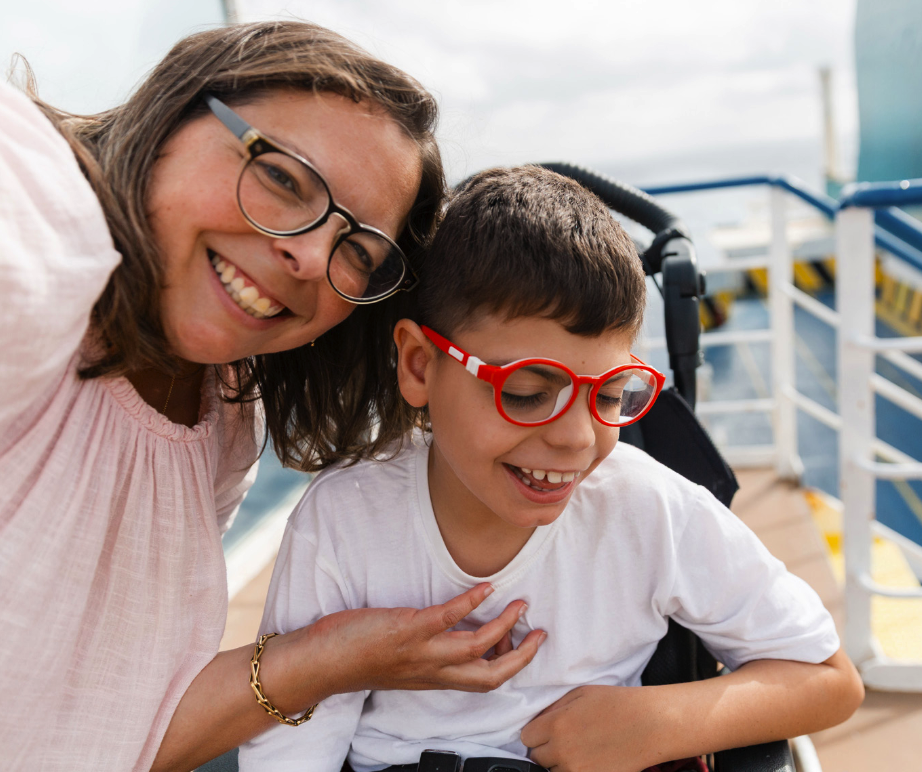
Vacations are meant to be relaxing — a time to reconnect with friends and family. Yet vacations can also feel overwhelming, especially when traveling with someone with a disability. Thankfully, a little planning can help you cruise with confidence.
The Benefits
Cruising offers unique opportunities for families to vacation together while catering to individual preferences. The all-in-one environment, including lodging, dining and entertainment, along with streamlined transportation logistics, eases parents’ burden of coordinating family vacations. Many cruise lines also offer added accessibility services and accommodations.
Physical Accessibility
Careful planning ensures that your child’s physical needs are met. A limited number of staterooms include wider doorways, roll-in showers and grab bars. When booking your cruise, discuss your family’s physical needs with a cruise line representative. Most ships have mini fridges in the rooms to store medications that require refrigeration.
Note, however, that there are few accessible rooms on each ship, so you may need to book your cruise well in advance to ensure that your child’s physical needs are met.
Navigating the Ship
Some ships are much more accessible than others. For example, some are designed so you can simply use the elevator to reach the desired floor and activity area. Others are more complicated, requiring you to take multiple elevators and indirect routes to get where you want to go.
Major cruise lines post online maps of their ships to help you evaluate how to navigate the ship based on your child’s needs. Look closely at the deck layouts, elevator locations and distances between activities.
Shore Excursions
When in port, shore excursions give you the chance to explore new places and try new things. Excursion descriptions typically state potential accessibility issues. Research these in advance, looking specifically for “accessible” or “low mobility” excursion labels.
When ports or excursions are not accessible, consider staying onboard and taking advantage of less-crowded activity times. Some excursions require passengers to take a smaller boat to get from the ship to shore.
While accessible options are available, there may not be accessible spots on each boat. In these cases, plan extra time to get ashore.
Onboard Activities
Cruise ships offer endless activities for families, including kids’ clubs staffed by trained professionals, adaptive activities, flexible participation options and family-friendly shows and movies. Seek activities in quieter areas or during less crowded times to ease accessibility issues and sensory stimulation.
Notify the cruise line in advance of any dietary, mobility or support needs. Then meet with guest services early in the trip to clarify all needs and accessible areas.
Managing Sensory Sensitivities
Cruises are full of crowds, noise, announcements and bright lights. Busy dining areas and embarkation/disembarkation periods can further increase the potential for sensory overload.
Plan to support your child’s needs. Bring sensory supports like noise-canceling headphones or comfort items and request quieter dining times or locations. Create or find a calm space like your cabin, a library or less crowded decks.
Many families love the flexibility, excitement and all-inclusive nature of cruises. With proper planning and a little homework, your family can enjoy the cruise of your dreams this summer.
Related Articles
College Accommodations: What Every Parent Needs to Know