

As the summer heat intensifies, families may want to start thinking more about how to keep their little ones safe in the sun. Rising temperatures can increase the risk of dehydration, heat exhaustion, sunburn and heat stroke.
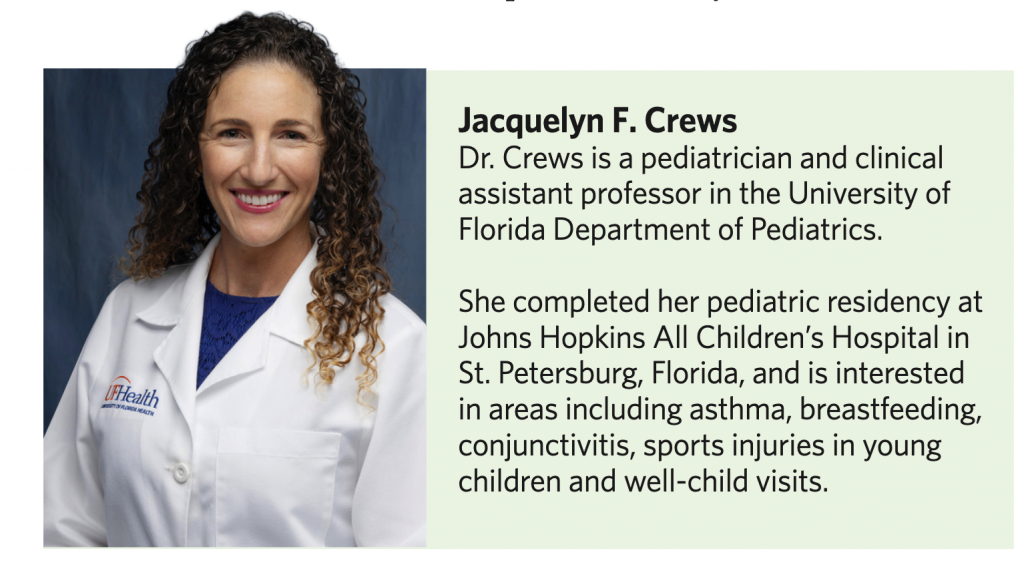
To better understand how parents can prepare, we spoke with Dr. Jacquelyn Crews, a pediatrician and clinic assistant professor in the University of Florida Department of Pediatrics, to answer common questions about summer safety.
Are children more vulnerable to heat-related illnesses (heat stroke, heat exhaustion, high-intensity sunburns, dehydration, etc.) compared to adults, and if so, why?
What are the key warning signs of heat exhaustion and heat stroke that parents should watch for? When should a parent seek immediate medical attention?
How much water should children drink on hot summer days, and does that amount vary by age?
What do you advise regarding sports drinks versus water for hydration?
Water is usually fine for the first about hour of physical activity if they’re going to be doing intense physical activity out in the sun. If it’s going to last longer than an hour, then they can consider those sports drinks like electrolyte-containing drinks. We do recommend avoiding caffeine or energy drinks in general, but especially in hot conditions.
If a child refuses to drink water, what are some practical strategies parents can use to keep them hydrated?
We consider popsicles as a form of hydration for the younger kids … they could [also] flavor their water with sugar-free sweeteners … Although it wouldn’t be my first recommendation. If they’re not going to drink anything else, they could have sports drinks and even consider just diluting the sports drinks with water.
Are there any general signs for parents to tell if their child is dehydrated?
You can monitor how much they urinate and drink to quench their thirst. You can also look at the inside of their mouth, and it should always look wet … [They should also be] crying real tears — if they’re crying, there should be tears produced.
When should a parent seek medical attention for dehydration in their child?
Decreased urination, feeling like their heart is racing and then not sweating. So if you don’t have water coming out of you somewhere, that’s a sign that you don’t have enough water in you.
How can parents tell the difference between a mild sunburn and one that needs medical attention?
A mild sunburn would just be redness of the skin … it should be a light pink, a light red or pink coloration of the skin … If it’s deep red or blistering, that would require medical attention, which could just be with their pediatrician.
Is there a specific SPF level that you would recommend for kids? How often should it be applied?
The SPF minimum should be 30, applied every two hours, and for kids under 6 months old, we don’t recommend sunscreen. We recommend avoiding direct sun exposure and using clothing and hats to protect their skin … lightweight, breathable, light-colored fabrics tend to help prevent overheating.
How long should a child wait before entering the water after applying sunscreen?
It’s best to apply the sunscreen before you get into sun exposure, at least 20 minutes before you’re exposed to the sun. If you apply it once you get there, I would wait at least 15 to 20 minutes before you go in the water. I also want to make a note about if you’re somewhere where you need insect repellent. Insect repellent does not get reapplied every few hours, and we would recommend putting on the sunscreen first and the bug repellent on top of it.
Are there any myths about summer safety (heat, hydration, sunburns, etc.) for children that you wish parents understood better?
I’ve heard one of them being the belief that if it’s very cloudy out, you can’t get sunburned. That’s a great one … UV rays can absolutely still get through the clouds. So we do still recommend sunscreen and all of these protective measures on cloudy days. Also, remember that sunlight can reflect off of water. So if they’re in the pool or in the river or at the beach, even if they’re wearing a hat, they should still wear sunscreen because the rays can still reflect off the water and get to their face and skin.
Is there a piece of advice you would give parents to keep their kids safe in the summer, especially in hot environments?
I think it helps to plan your day ahead so that you can have lots of outdoors time but while avoiding the hottest parts of the day, which is [the] middle of the afternoon. As long as they follow some general precautions, you should still be able to have very fun summer days.
Is there anything else you’d like to share with parents?
If kids are on medication that can make them use water, like stimulants for ADHD, or if they’re on medications that make them pee more frequently, they might be at higher risk for dehydration. There are some antibiotics and skin creams that can cause you to be more sensitive to the sun. Those people in particular should wear sunscreen and avoid the hottest parts of the day.
Related Articles
Molluscum Contagiosum: What Every Parent Should Know About the Highly Contagious Skin Infection
How To Have an A+ Doctor Visit
Everything to Know About the Mandatory EKGs for Florida Student Athletes